Metabolic Cancer Therapy (2026): Evidence, Biomarkers, and the Truth About Repurposed Drug Combinations
Introduction: Why Metabolic Therapy Is Back in Focus
Cancer treatment has shifted from “one-size-fits-all chemotherapy” to precision oncology and immunotherapy. Alongside this, a parallel idea has gained traction:
Can we target cancer metabolism—its energy supply and growth signals—to improve outcomes?This approach is rooted in the Warburg effect, where many tumors rely heavily on glucose and altered mitochondrial function.
But despite strong interest, metabolic therapies are not yet considered true breakthroughs. Here’s what the evidence actually shows—and where the field is heading.
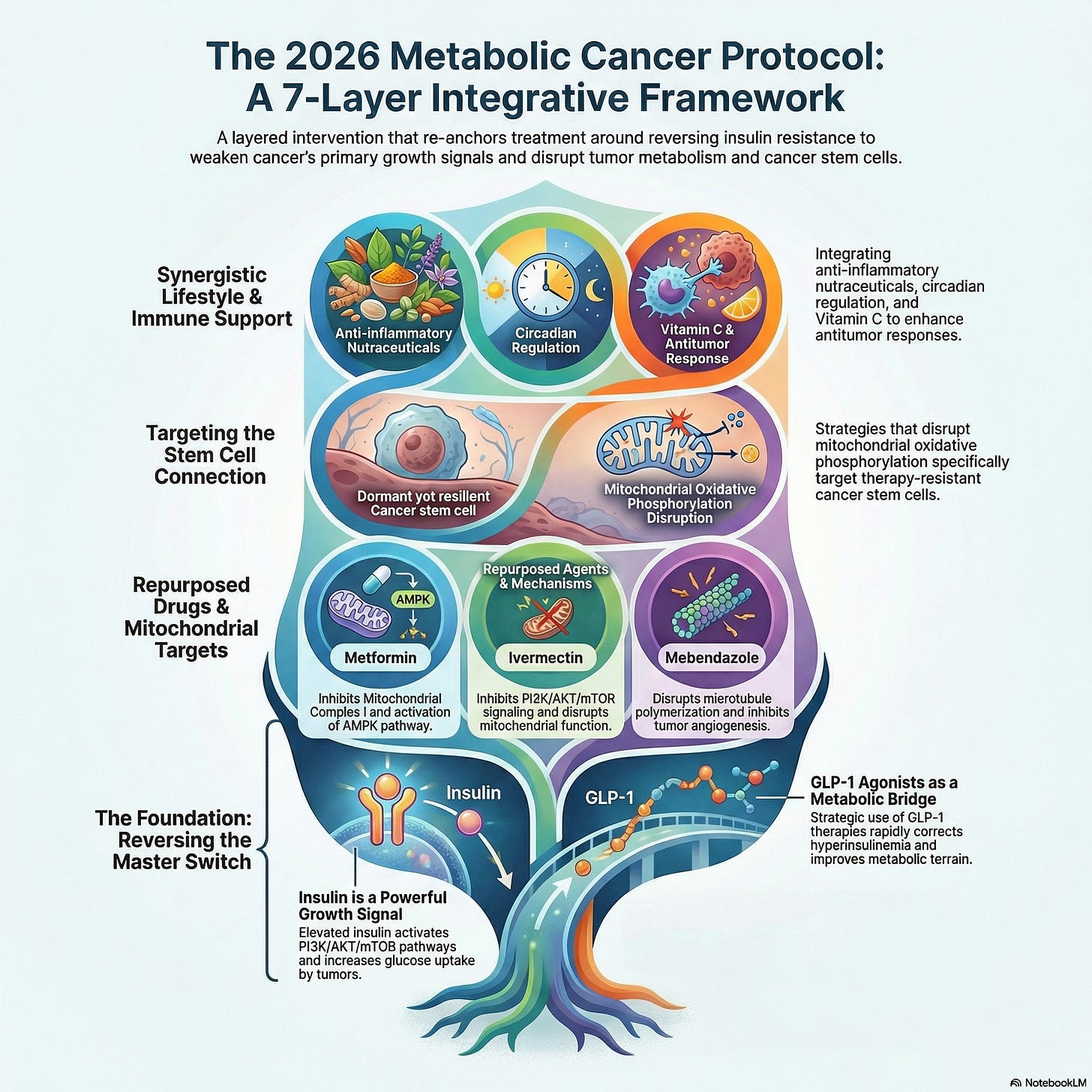
What Is Metabolic Cancer Therapy?
Metabolic therapy refers to strategies that aim to:
Reduce glucose and insulin signaling
Disrupt tumor energy production
Increase oxidative stress in cancer cells
Improve treatment sensitivity
These approaches fall into three main categories:
1. Dietary Interventions
Fasting-Mimicking Diet (FMD)
Cycles of low-calorie intake designed to:
Lower insulin and IGF-1
Protect normal cells
Sensitize cancer cells
Research pioneered by Valter Longo
Ketogenic / Low-Carb Diets
Reduce glucose availability
Lower insulin signaling
👉 Evidence status:
Promising early trials
Improved tolerance to chemotherapy
No definitive survival benefit yet
2. Repurposed Metabolic Drugs
Commonly discussed agents:
Metformin
Ivermectin
Mebendazole
Proposed mechanisms:
Mitochondrial disruption
Microtubule inhibition
Insulin pathway modulation
Wnt/β-catenin signaling interference
👉 Reality check:
Strong lab data
Limited high-quality human trials
No guideline-level validation
3. High-Dose Nutrient Therapies
IV Vitamin C (pro-oxidant effects)
Vitamin D (immune modulation)
👉 Evidence is mixed but evolving, especially in combination settings.
The Controversial Combo: Ivermectin + Mebendazole + Metabolic Therapy
This “multi-hit” strategy is widely discussed online.
Theoretical synergy:
Mebendazole → disrupts cancer cell division
Ivermectin → affects signaling and mitochondria
Metabolic therapy → weakens tumor environment
👉 In theory:
Attack structure + signaling + metabolism simultaneously
But here’s the reality:
❌ No randomized controlled trials
❌ No proven overall survival benefit
❌ No standardized protocol
❌ Not included in National Comprehensive Cancer Network
Conclusion:
This combination is experimental—not a proven cancer treatmentWhy Metabolic Therapy Is Not a Breakthrough (Yet)
To be considered a true breakthrough, a therapy must:
Improve overall survival (OS)
Show durable remission
Be validated in large trials
Enter clinical guidelines
Compared to drugs like Pembrolizumab:
Metabolic therapies:
✅ Biologically plausible
⚠️ Clinically promising
❌ Not yet proven at scale
Biomarkers: The Missing Link
The future of metabolic oncology is not universal—it’s selective.
Most relevant biomarkers (2026):
1. Insulin Resistance (Top Priority)
Fasting insulin, HOMA-IR
Identifies patients most likely to benefit from metabolic interventions
2. Glycolytic Activity
FDG-PET uptake
LDH levels
👉 Indicates glucose-dependent tumors
3. Wnt/β-Catenin Activation
Linked to immune resistance
Potential target of Ivermectin (hypothesis)
4. Mitochondrial Dependency
OXPHOS signatures
Identifies tumors sensitive to mitochondrial disruption
Key insight:
Future success depends on biomarker-driven selection—not blanket use
Best-Match Cancer Types (Metabolic Profile)
Tier 1 (Strongest Candidates)
Pancreatic cancer
Glioblastoma
Colorectal cancer (KRAS/Wnt-driven)
Tier 2 (Moderate Match)
Triple-negative breast cancer
Liver cancer
Advanced prostate cancer
Tier 3 (Variable)
Lung cancer (subtype-dependent)
Ovarian cancer
Safety and Risks You Should Not Ignore
This is where many online protocols become misleading.
Key concerns:
Dose uncertainty (anti-parasitic ≠ anti-cancer dosing)
Liver toxicity risk
Neurological side effects (especially ivermectin at high doses)
Malnutrition risk with aggressive dietary restriction
👉 Important:
If considering high-dose nutrients or metabolic interventions, consult a qualified medical professional. These approaches require monitoring and personalization—not self-experimentation.
What Would Turn This Into a Breakthrough?
For metabolic therapy (or these combinations) to become mainstream:
Phase 3 randomized trials
Demonstrated overall survival benefit
Biomarker-defined responders
Integration into guidelines (e.g., National Comprehensive Cancer Network)
The Most Likely Future Scenario
The first real breakthrough in this space will likely look like:
Metabolic intervention (e.g., fasting-mimicking diet) + immunotherapy + biomarker selection—not standalone repurposed drugs.
Bottom Line
Metabolic therapy is scientifically credible
Some approaches are clinically promising as adjuncts
The ivermectin + mebendazole combination is:
Unproven
Experimental
The field’s future depends on:
Precision biomarkers
Combination strategies
High-quality clinical trials
FAQ
Is metabolic cancer therapy effective?
It may improve treatment response or reduce side effects in some cases, but it has not been proven to improve survival in large trials.
Can ivermectin and mebendazole treat cancer?
There is no high-quality clinical evidence showing they can treat cancer effectively. They remain experimental.
Which cancers are most metabolically driven?
Pancreatic cancer, glioblastoma, and colorectal cancer show the strongest metabolic signatures.
Is fasting safe during cancer treatment?
It can be beneficial in some contexts but carries risks. It should only be done under medical supervision.


.png)


.png)
.png)
Comments
Post a Comment